Baking for special diets—be it Vegan, Gluten-Free (GF), or Ketogenic (Keto)—is a high-stakes game. You’ve spent a premium on almond flour, sourced the perfect aquafaba, or measured out expensive erythritol. The batter looks perfect. You bake it. You cool it. And then... the nightmare.
The liner is welded to the cake. The bottom is a greasy, translucent mess. The "healthy" cake tastes like chemicals.
Specialty diets present unique chemical challenges that standard paper liners simply aren't designed to handle. The high fat content of Keto, the high moisture of Vegan baking, and the lack of structural gluten in GF recipes require a completely different approach to packaging. This guide will help you choose the best cupcake liners to support your specialized baking needs.
1. The Keto Conundrum: Battling the "Greasy Bottom"
Keto and Low-Carb baking are defined by one thing: Fat. We’re talking about recipes with 70%+ of calories coming from butter, coconut oil, and cream cheese.
The Problem: Oil Saturation
Standard 35gsm paper liners with a light silicone coating are no match for a Keto brownie or fat bomb. The hot oils act as a solvent, breaking down the paper fibers and the silicone barrier. The result is a liner that turns clear, soggy, and disintegrates when you try to peel it.
The Solution: Impermeable Barriers
-
Foil Liners (The Gold Standard): Metal is completely impervious to oil. Foil cupcake liners are the only guarantee against a greasy bottom in high-fat baking. They lock in the oils, keeping the crust crisp and the paper clean.
-
Heavy-Duty (60gsm) Double-Coated Liners: If you must use paper, you need the heaviest option available. Look for double-sided silicone coating. This creates a robust barrier on both the inside and outside of the liner.
-
PET (Plastic) Liners: For cold-set Keto fat bombs, clear PET liners are ideal. They are rigid, completely grease-proof, and showcase the product beautifully.
Pro Tip for Keto Bakers:
Because Keto batters are often "loose" (more like a liquid oil suspension than a thick batter), they are prone to leaking through the seams of the liner. Ensure your liners have a strong, heat-resistant crimped bottom seal.
2. The Gluten-Free Struggle: The "Stick-and-Tear" Epidemic
Gluten is the protein that gives traditional cakes their "spring" and structure. In its absence, Gluten-Free (GF) recipes rely on a mix of starches (tapioca, potato) and binders (xanthan gum, guar gum).
The Problem: Hyper-Adhesion
GF batters are notoriously sticky. When the cake bakes, the starches gelatinize and form a powerful bond with the paper fibers of the liner. When you try to peel the paper off, you don't just remove the paper—you tear chunks out of your cake, leaving a "naked" patch of sponge.
The Solution: High-Performance Release Agents
-
Premium Silicone Coating: You need a vegan baking cup with a high-quality, food-grade silicone coating. Unlike cheaper wax coatings, silicone doesn't melt; it provides a permanent non-stick surface.
-
The "Grease the Liner" Rule: Even with the best liners, GF bakers should adopt the habit of lightly spraying the liner with a non-stick spray (using avocado oil or coconut oil for Paleo/Keto) before adding the batter. This creates an extra release layer.
-
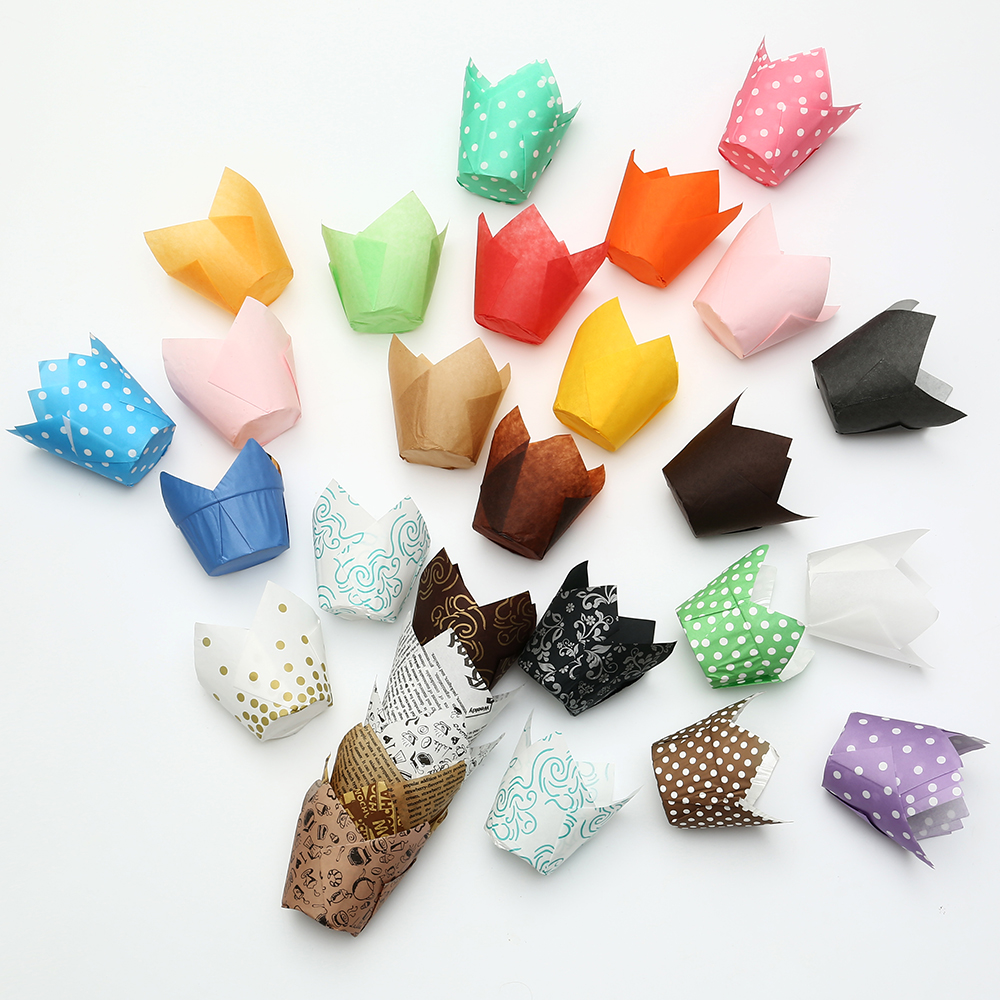
Tulip Liners: Because GF cakes often have a denser crumb, they can be harder to remove from standard liners. Using a Tulip-style liner (the tall, parchment-style ones) gives you a "handle" to peel the paper away more gently.
The Allergen Consideration:
If you are a GF bakery, your gluten free cupcake liners must be certified to be processed in a gluten-free facility. Cross-contamination can occur at the paper mill. Look for the GFCO (Gluten-Free Certification Organization) logo on your packaging supplier's specs.
3. The Vegan Verdict: Purity and Sustainability
Veganism extends beyond diet; it’s often tied to environmental ethics and a rejection of animal byproducts.
The Problem: Hidden Animal Products
Many "food-grade" coatings and processing aids are derived from animals. Traditional gelatin sizing might be used in paper production. Some "confectioner's glazes" used on liners contain shellac (derived from insects).
The Solution: Plant-Based and Synthetic Coatings
-
Silicone is Vegan: Good news! Silicone is a synthetic polymer made from silica (sand). It contains no animal products, making it the preferred coating for vegan baking cups.
-
PLA (Polylactic Acid) Coatings: For the eco-conscious vegan, look for liners coated with PLA. This bioplastic is derived from fermented plant starch (usually corn). It is both vegan and industrially compostable.
-
Unbleached Kraft Paper: Vegans often prefer minimal processing. Unbleached, natural brown liners signal a lack of chlorine bleaching and fewer chemical interventions.
The "Clean Label" Demand:
Vegan consumers are often the most ingredient-savvy. They will scrutinize your packaging. Ensure your liners are PFAS-Free and printed with Low Migration Inks. Any hint of a chemical smell or artificial dye bleeding into their plant-based cupcake will result in a lost customer.
4. The Paleo & Whole30 Dilemma: Non-Toxic is Non-Negotiable
Paleo and Whole30 diets focus on "eating clean" and avoiding "toxins." This philosophy extends strictly to cookware and packaging.
The Problem: Chemical Migration
Paleo bakers are highly sensitive to the idea of "xenoestrogens" and "endocrine disruptors" found in plastics and non-stick coatings. They will reject any liner that contains:
The Solution: The "Pure" Paper Liner
-
Uncoated (or Lightly Coated) Parchment: The safest option for these diets is a non toxic baking liner made from unbleached parchment paper. While it might stick slightly more than a silicone-coated liner, it contains zero synthetic chemicals.
-
Silicone-Coated (The Compromise): If sticking is a major concern, opt for a liner that uses a Platinum-Cured Silicone coating. Unlike cheaper peroxide-cured silicones, platinum-cured is considered medical-grade and purer.
-
Glass or Ceramic: For baking at home, suggest using reusable silicone baking cups that are certified platinum-grade, or simply baking directly in greased ramekins.
5. Comparison Table: Specialty Diet Liner Matrix
6. B2B Strategy: Marketing to the "Alternative" Baker
If you sell bulk cupcake liners to health food stores, vegan bakeries, or keto cafes, your marketing must speak their language.
-
Highlight "Clean" Certifications: Prominently display "PFAS-Free," "Plastic-Free," "FSC-Certified," and "Vegan Friendly" badges on your product pages.
-
Focus on Performance: For Keto clients, emphasize "Zero Grease Bleed." For GF clients, emphasize "Clean Release."
-
Offer Sample Packs: Because these bakers are often experimenting, offer small "Trial Packs" of your heavy-duty or specialty liners so they can test them with their specific recipes before committing to a bulk order.
Conclusion: Support the Recipe, Don't Sabotage It
A specialty diet cupcake is an investment—an investment of money in premium ingredients and an investment of trust from the consumer. Using the wrong liner undermines both.
By selecting the right vegan baking cups or keto-friendly foil liners, you ensure that the integrity of the recipe remains intact from the oven to the plate. You protect the texture, preserve the flavor, and uphold the health promises that your customers rely on.
Ready to find the perfect match for your specialized baking? Our range of non-toxic, high-performance liners is designed to meet the strictest dietary and ethical standards.