Walk into any supermarket, and you’ll see them: boxes labeled "Muffin Liners" and boxes labeled "Cupcake Liners." To the untrained eye, they look identical. Same shape, same paper. But ask any professional baker, and they will tell you: using the wrong one can ruin your bake. While they are physically similar, the engineering behind muffin liners vs cupcake liners is tailored to the specific chemistry of the batter they hold. Using a cupcake liner for a high-fat bran muffin is a recipe for a greasy disaster.
1. The Batter Breakdown: Chemistry Dictates Packaging
The fundamental difference lies in the food itself.
-
Cupcakes: These are miniature cakes. They are high in sugar, low in fat (relatively), and rely on a delicate crumb structure. They need a liner that provides gentle support and easy release.
-
Muffins: These are "quick breads." They are significantly higher in fat and oil, often containing fruits or vegetables (like blueberries or zucchini) that release moisture. They need a liner that can withstand oil saturation and structural stress.
2. The Weight (GSM) Factor: Thickness Matters
This is the most critical technical difference.
-
Cupcake Liners (Standard): Typically 30gsm to 40gsm. This is thin enough to be pliable and cheap enough for high-volume birthday parties. It’s sufficient for a batter that doesn't try to "escape" or "soak through."
-
Muffin Liners (Premium): Typically 45gsm to 60gsm. This is a much heavier, more rigid paper. It is designed to stand up to the weight of a dense muffin batter without collapsing. If you use a 35gsm liner for a jumbo blueberry muffin, the sides will bulge, and the liner will likely tear during the peel.
3. The Grease-Proof Barrier: Silicone Coating
-
Cupcake Liners: Usually feature a single-sided or light double-sided silicone coating. This is enough to prevent a cake from sticking but may not stop oil migration from a high-fat muffin.
-
Muffin Liners: Must have a heavy-duty, double-sided silicone coating. Muffins contain significantly more oil (often 1/2 cup or more per batch). Without a robust coating, the oil will turn the paper translucent, making it soggy and prone to tearing. This is why greaseproof muffin cups are a specific category of product.
4. The Height and Shape: Containing the "Spread"
-
Cupcake Liners: Usually have a standard height (approx. 1.25 inches). They are designed to hold a batter that rises uniformly.
-
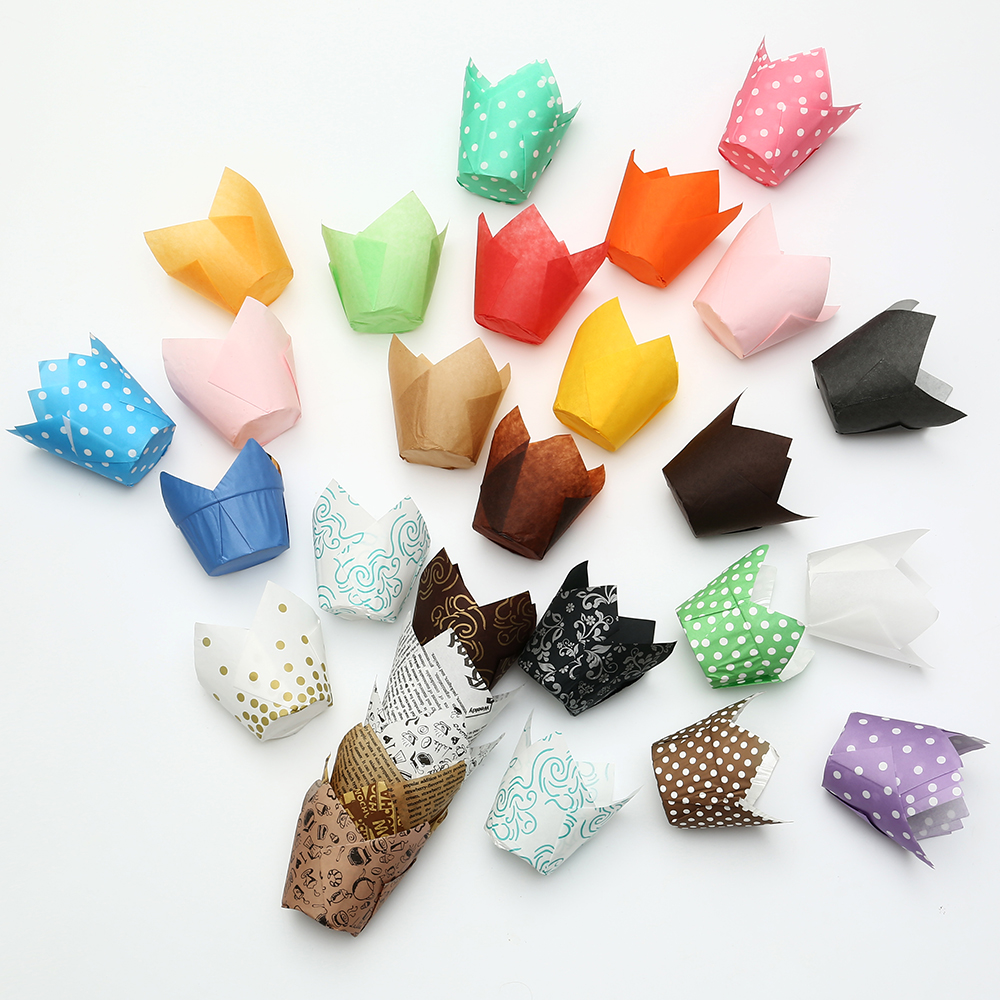
Muffin Liners: Often come in Tulip (Swedish) style or Jumbo sizes. Muffins are known for their "muffin top"—the part that spills over the edge. A standard cupcake liner is too short and will result in batter sticking to your muffin pan. Tulip liners are tall (3-4 inches) and frilled, allowing the muffin to rise high without overflowing while providing a rustic, artisanal look.
5. The "Peeling" Phenomenon
-
Cupcakes: If baked correctly, a cupcake liner peels away cleanly, often in one piece.
-
Muffins: Muffins are notoriously difficult to peel. The high sugar and moisture content create a glue-like bond with the paper. This is why many muffins are sold in double-walled liners (a paper liner inside a decorative foil or cardboard sleeve) or in Tulip liners where the top frill provides a "handle" to peel back the paper.
6. Can You Use Them Interchangeably?
-
Using a Muffin Liner for a Cupcake: Yes, absolutely. A heavy-duty muffin liner will work perfectly for a cupcake. It might look a bit "industrial," but it will perform well.
-
Using a Cupcake Liner for a Muffin: Highly Risky. Unless it's a very "dry" muffin (like a low-fat bran muffin), a standard cupcake liner will likely fail. Expect grease stains, collapsed sides, and a frustrated customer trying to peel it off.
7. Size Chart: Standard vs. Jumbo vs. Mini
|
Type
|
Top Diameter
|
Base Diameter
|
Height
|
Best Use
|
|
Mini
|
1.25"
|
0.75"
|
0.75"
|
Petit fours, kids' snacks
|
|
Standard Cupcake
|
2.5"
|
2"
|
1.25"
|
Birthday parties, dessert tables
|
|
Standard Muffin
|
2.75"
|
2.125"
|
1.5"
|
Breakfast muffins, coffee shop sales
|
|
Jumbo Muffin
|
3.5"
|
2.5"
|
1.75"
|
"Bakery Style" muffins, savory bakes
|
|
Tulip
|
Varies
|
2"
|
3.5"+
|
Artisan muffins, farmers' markets
|
8. B2B Buying Advice
If you are a bakery owner purchasing wholesale baking cups, do not buy a "one size fits all" solution.
-
For Cupcakes: Buy standard 35-40gsm colorful cupcake liners.
-
For Muffins: Buy 50-60gsm greaseproof muffin cups or Tulip liners.
-
For "Bakery Style": Invest in Jumbo liners. They allow you to use more batter per unit, increasing your per-item revenue.
Conclusion: Match the Tool to the Task
The difference between a muffin liner and a cupcake liner isn't just marketing; it's material science. By choosing the right liner for the right batter, you ensure structural integrity, prevent grease bleed, and deliver a better eating experience. Don't let a $0.02 liner ruin a $4.00 muffin. Invest in quality, purpose-built liners for your best-selling products.